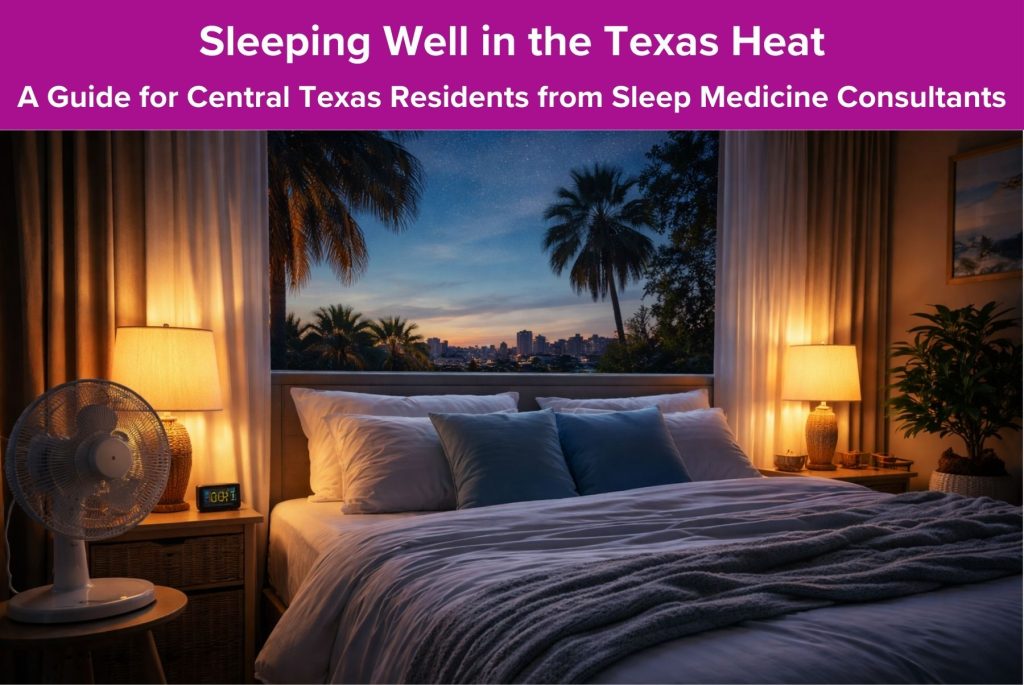
 A Guide for Central Texas Residents from Sleep Medicine Consultants
Summer in Central Texas brings sunshine, long evenings, and—let’s be honest—triple-digit temperatures that don’t always cool down after dark. In Austin and San Antonio, overnight lows can linger in the 80s, making it difficult to fall and stay asleep. If you’ve ever tossed and turned after a day at Barton Springs Pool or stayed up late enjoying the San Antonio River Walk summer nights, you know how challenging summer insomnia in Texas can be.
At Sleep Medicine Consultants, we understand how environmental factors like heat, dehydration, and extended daylight hours impact sleep health. Let’s explore how to sleep better—even during the hottest Austin and San Antonio nights.
Why Heat Disrupts Sleep
Your body temperature naturally drops in the evening as part of your circadian rhythm. This cooling process signals your brain that it’s time for rest. When your bedroom remains too warm, your body struggles to lower its core temperature, interfering with:
- Sleep onset (falling asleep)
- Deep sleep cycles
- REM sleep
- Overall sleep quality
During peak summer months, this can contribute to summer insomnia in Texas, leaving you feeling fatigued and irritable the next day.
What Is the Best Temperature for Sleep?
Research consistently shows that the best temperature for sleep is between 60°F and 67°F for most adults.
However, in Austin & San San Antonio’s triple-digit heat, maintaining this range can be challenging without effective cooling strategies.
If your thermostat is set above 72°F at night, your sleep may be compromised—especially if you’re already sensitive to heat.
Cooling Strategies for Bedrooms in Austin & San Antonio Summers
If you’re searching for practical sleep tips hot weather can rely on, start with these evidence-based strategies:
1. Optimize Your Thermostat
- Set your AC between 65°F and 68°F overnight if possible.
- Use a programmable thermostat to cool the room before bedtime.
2. Use Strategic Airflow
- Ceiling fans improve air circulation and evaporative cooling.
- Place a fan near an open window in the evening if temperatures drop.
- Use blackout curtains to block daytime heat buildup.
3. Choose Breathable Bedding
- Cotton, linen, or moisture-wicking bamboo sheets are ideal.
- Avoid heavy memory foam mattress toppers that trap heat.
- Consider cooling mattress technology if heat is a chronic issue.
4. Take a Warm (Not Cold) Shower Before Bed
Counterintuitively, a lukewarm shower helps your body cool down afterward, promoting natural sleep signals.
5. Cool Your Pulse Points
Applying a cool compress to wrists, neck, or behind knees can lower perceived body temperature.
How Dehydration Impacts Sleep in the Texas Heat
Dehydration is a hidden contributor to poor sleep during Austin and San Antonio summers.
Why It Matters:
- Dehydration increases heart rate.
- It can trigger nighttime leg cramps.
- It may cause dry mouth and throat discomfort.
- It disrupts REM sleep.
After long evenings outdoors—whether watching Austin FC matches or attending summer Spurs games in San Antonio—your body needs adequate hydration.
Tips:
- Drink water consistently throughout the day.
- Avoid excessive alcohol during summer nights (it worsens dehydration and fragments sleep).
- Stop large fluid intake about 1–2 hours before bed to prevent nighttime awakenings.
Late Sunsets and Circadian Rhythm Disruption
In June and July, daylight in Central Texas stretches past 8:30 PM. While beautiful, these long evenings delay melatonin production.
How Late Sunsets Affect Sleep:
- Increased evening light suppresses melatonin.
- Social activities extend bedtime.
- Screen exposure compounds light disruption.
Whether enjoying the River Walk or relaxing after a day at Barton Springs Pool, it’s important to:
- Dim lights after sunset.
- Limit screen use 1 hour before bed.
- Maintain a consistent bedtime—even during summer schedules.
When Heat-Related Sleep Problems Signal Something More
If your sleep struggles persist beyond environmental discomfort, it may indicate an underlying sleep disorder such as:
- Insomnia
- Sleep apnea
- Restless leg syndrome
- Circadian rhythm disorders
Heat may worsen symptoms, but it is not always the sole cause.
At Sleep Medicine Consultants, we specialize in diagnosing and treating complex sleep conditions for Austin and San Antonio – area residents.
Comprehensive Q&A: Sleeping in the Texas Heat
Q1: Why do I wake up more often during hot nights?
A: Elevated room temperatures prevent your body from entering deeper stages of sleep. You’re more likely to remain in lighter sleep phases, leading to frequent awakenings.
Q2: Is it unhealthy to sleep with the AC very low?
A: Not necessarily. Sleeping in a cool room (60–67°F) is generally healthy. However, extremely cold air can cause dryness or respiratory discomfort in some individuals.
Q3: Can fans alone keep me cool enough?
A: Fans improve comfort through air movement but don’t lower room temperature significantly. In triple-digit Austin and San Antonio heat, AC is usually necessary for optimal sleep.
Q4: Does humidity affect sleep quality?
A: Yes. High humidity impairs your body’s ability to cool through sweat evaporation, increasing discomfort and nighttime awakenings.
Q5: Why do I feel more tired even if I slept 7–8 hours?
A: Heat can reduce deep sleep and REM sleep, which are critical for restoration. Time asleep does not always equal quality sleep.
Q6: Can dehydration cause insomnia?
A: Yes. Dehydration increases stress hormones and discomfort, making it harder to fall and stay asleep.
Q7: Should I exercise at night in the summer?
A: Avoid intense exercise within 2–3 hours of bedtime, especially in hot conditions. Elevated body temperature delays sleep onset.
Q8: Are cooling mattresses worth it?
A: For individuals sensitive to heat or experiencing chronic summer insomnia in Texas, cooling sleep systems can significantly improve comfort and sleep continuity.
Q9: Does alcohol help me sleep in hot weather?
A: Alcohol may make you drowsy initially but fragments sleep and worsens dehydration—particularly problematic during Austin & San Antonio summers.
Q10: When should I see a sleep specialist?
A: If sleep problems persist for more than 2–3 weeks, cause daytime fatigue, or involve loud snoring or breathing pauses, it’s time for professional evaluation.
Sleep Well All Summer Long
Central Texas summers are part of what makes our region vibrant—from Austin FC matches to evenings on the River Walk. But your sleep shouldn’t suffer because of the heat.
By optimizing bedroom temperature, staying hydrated, and protecting your circadian rhythm, you can dramatically improve sleep quality—even during the hottest months.
If you’re struggling with persistent sleep issues, professional care can make all the difference.
Contact Sleep Medicine Consultants
Sleep Medicine Consultants
 Austin Location
5929 Balcones Dr. #303
Austin, TX 78703
 (512) 420-9900
San Antonio Location
4114 Pond Hill Road, Suite 101
San Antonio, TX 78231
(210) 742-6682