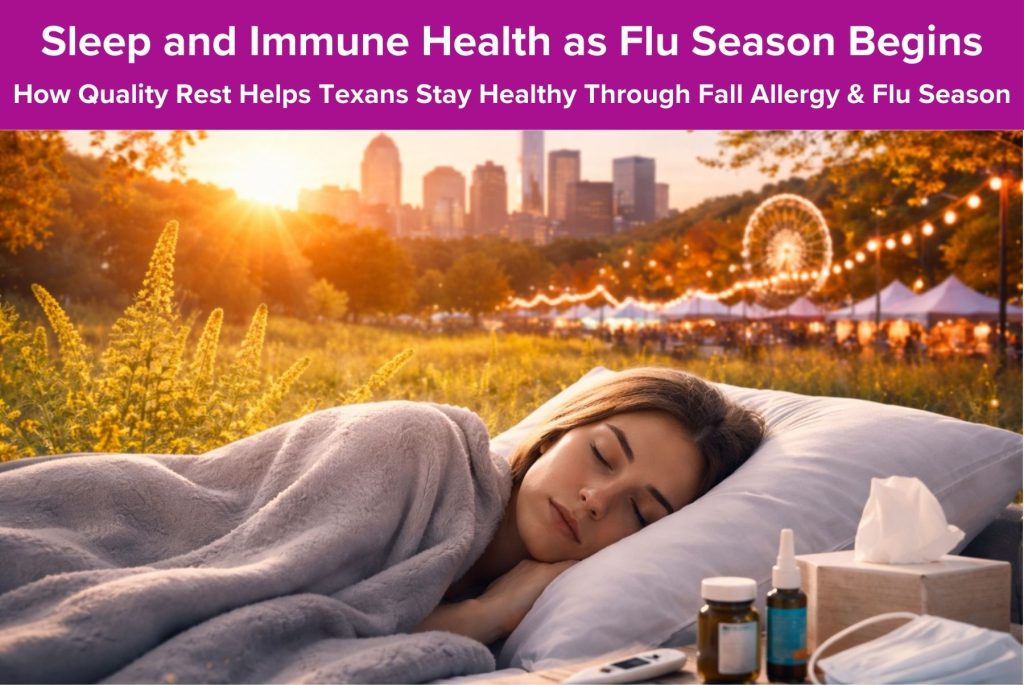
How Quality Rest Helps Texans Stay Healthy Through Fall Allergy & Flu Season
As fall arrives in Texas, cooler mornings bring more than pumpkin patches and football games — they also signal the start of flu season and peak ragweed allergies. Whether you’re preparing for Austin City Limits (ACL) Festival, planning a trip to San Antonio’s fall festivals, or simply navigating cedar and ragweed season, your immune system is working overtime.
At Sleep Medicine Consultants, we often remind patients that one of the most powerful tools for staying healthy during flu season isn’t found in a pharmacy — it’s found in your bedroom.
Let’s explore the important connection between sleep and immune health, especially during Texas flu season.
Why Sleep Matters More During Flu Season in Texas
Each year, as temperatures drop and people spend more time indoors, viruses spread more easily. In Central Texas, fall also brings high ragweed counts and seasonal allergens that can irritate airways and disrupt sleep.
This combination creates a perfect storm:
- Increased viral exposure
- Inflamed nasal passages from allergies
- Poor sleep due to congestion
- Weakened immune response
When sleep suffers, immunity follows.
If you’re searching for information on “sleep and flu season Texas”, the key takeaway is this: consistent, restorative sleep strengthens your immune defense when you need it most.
How Good Sleep Prevents Illness
1. Sleep Boosts Infection-Fighting Cells
While you sleep, your body produces and releases cytokines — proteins that help fight inflammation and infection. Adequate sleep increases:
- T-cell activity
- Natural killer (NK) cell function
- Antibody production
Studies show people who sleep fewer than 6 hours per night are significantly more likely to catch viral infections compared to those who get 7–9 hours.
2. Sleep Enhances Vaccine Effectiveness
Getting your flu shot this season? Sleep matters here too.
Research indicates that people who are well-rested before and after vaccination develop stronger antibody responses. That means your body is better prepared to fight the virus if exposed.
3. Sleep Reduces Inflammation
Chronic sleep deprivation increases systemic inflammation, which can worsen:
- Asthma
- Seasonal allergies
- Autoimmune conditions
- Cardiovascular disease
For Texans dealing with ragweed and fall allergy season, quality sleep can reduce the severity of symptoms and improve overall resilience.
How Lack of Sleep Weakens Immunity
When sleep is shortened or fragmented, several negative changes occur:
Reduced Immune Response
Your body produces fewer protective cytokines and infection-fighting antibodies.
Increased Stress Hormones
Sleep deprivation raises cortisol levels, which suppress immune function.
Higher Inflammation
Poor sleep promotes chronic low-grade inflammation, making it harder for your body to fight infections effectively.
Slower Recovery
If you do get sick, insufficient sleep can prolong recovery time.
Texas Fall Factors That Disrupt Sleep
🌾 Ragweed & Allergy Congestion
Austin is known for high allergen counts. Nasal congestion and sinus pressure can cause:
- Frequent awakenings
- Mouth breathing
- Snoring
- Worsened sleep apnea symptoms
🎵 ACL Festival Preparation
ACL brings excitement — and late nights. Sleep disruption before or after multi-day events can leave you more susceptible to illness.
🎉 San Antonio Fall Festivals & Travel
Travel, crowds, and schedule changes can disrupt sleep patterns, lowering immune defenses.
If you’re planning fall festivities, prioritizing sleep before and after events can reduce your risk of getting sick.
Signs Your Sleep May Be Affecting Your Immune Health
- You frequently catch colds
- Illnesses last longer than usual
- You wake feeling unrefreshed
- You snore loudly or stop breathing during sleep
- You experience chronic fatigue
- Allergy symptoms feel worse at night
Underlying sleep disorders like insomnia or sleep apnea can significantly impact immune resilience.
Tips for Strengthening Immunity Through Better Sleep
- Aim for 7–9 hours nightly
- Keep a consistent sleep schedule (even on weekends)
- Use allergy-proof bedding covers
- Shower before bed during ragweed season
- Keep bedroom air clean with HEPA filtration
- Avoid alcohol close to bedtime (especially during festivals)
- Limit screen exposure 1 hour before bed
- Seek evaluation if snoring or insomnia persists
If sleep problems continue, professional evaluation may be necessary.
Comprehensive Q&A: Sleep and Immune Health During Flu Season
Q: How does sleep help prevent the flu?
A: Sleep strengthens immune cells that detect and destroy viruses. People who sleep less than 6 hours are more likely to contract respiratory infections.
Q: Can poor sleep make allergy symptoms worse?
A: Yes. Inflammation from sleep deprivation can intensify allergy symptoms, especially during peak ragweed season in Texas.
Q: Does sleep apnea affect immune health?
A: Absolutely. Untreated sleep apnea causes fragmented sleep and oxygen drops, which can impair immune function and increase inflammation.
Q: Is it okay to “catch up” on sleep after a festival weekend?
A: Extra rest helps recovery, but chronic sleep deprivation cannot be fully reversed with one long night. Consistency is key.
Q: Does melatonin help immunity?
A: Melatonin regulates sleep cycles and may have antioxidant properties, but it’s best used under medical guidance.
Q: How many hours of sleep do adults need?
A: Most adults require 7–9 hours of quality sleep per night for optimal immune health.
Q: Why do I get sick after big events like ACL?
A: Large crowds increase exposure to viruses, and late nights reduce immune defenses — a combination that raises infection risk.
Q: Can improving sleep really reduce how often I get sick?
A: Yes. Strong research shows that consistent, adequate sleep lowers susceptibility to viral infections.
Q: When should I see a sleep specialist?
A: If you experience chronic insomnia, loud snoring, pauses in breathing, daytime fatigue, or frequent illness, a professional evaluation is recommended.
Protect Your Health This Flu Season
As flu season begins and fall allergies peak in Texas, sleep should be a top priority — not an afterthought. Whether you’re gearing up for ACL Festival, enjoying San Antonio’s fall celebrations, or simply navigating ragweed season, strong immune health starts with restorative sleep.
If you suspect a sleep disorder may be impacting your immunity, the team at Sleep Medicine Consultants is here to help.
Contact Sleep Medicine Consultants
Sleep Medicine Consultants
📍 Austin Location
5929 Balcones Dr. #303
Austin, TX 78703
📞 (512) 420-9900
📍 San Antonio Location
4114 Pond Hill Road, Suite 101
San Antonio, TX 78231
📞 (210) 742-6682